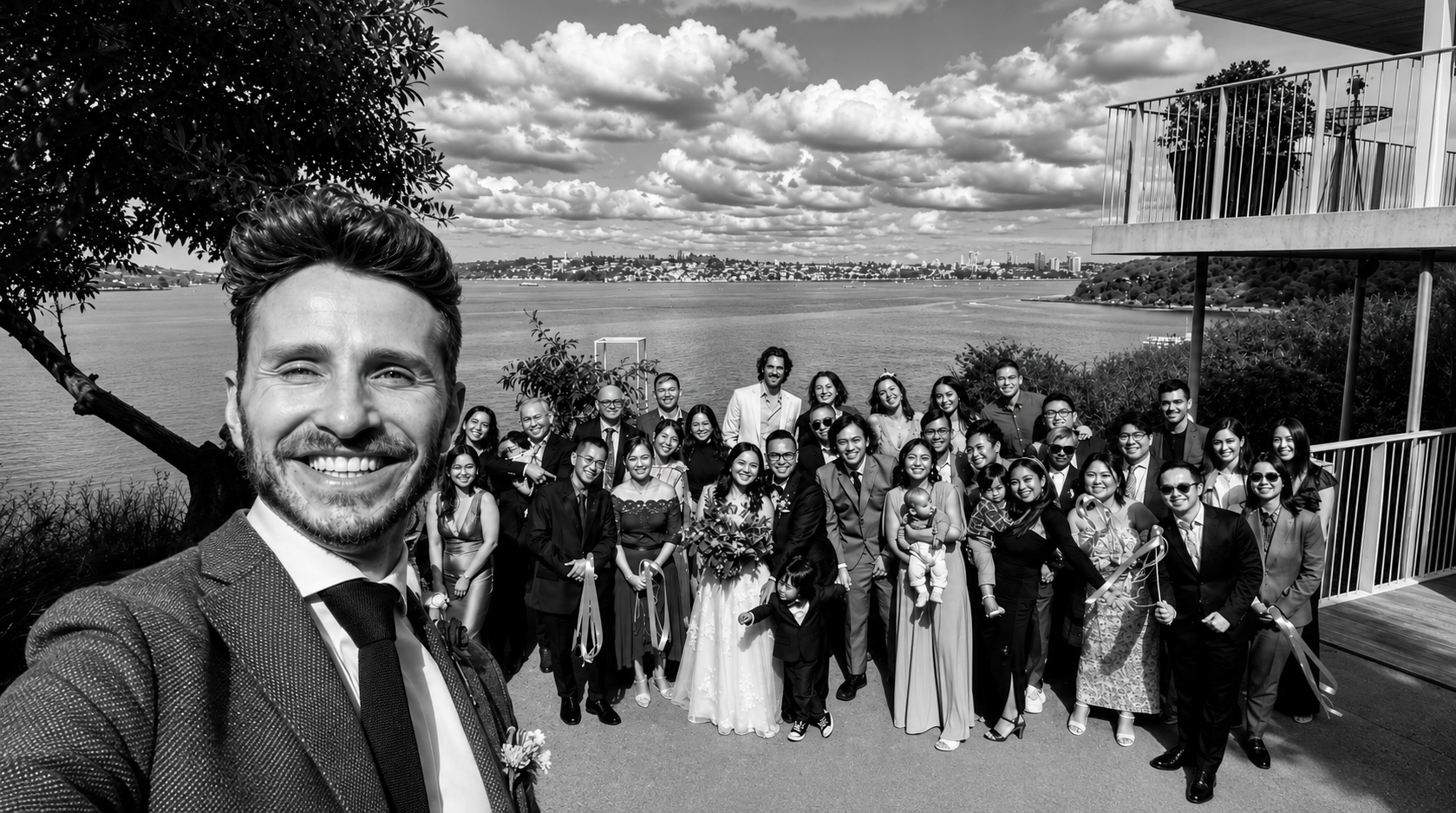
It’s very easy to fall in love with a wedding venue because of the view, the gardens or one particularly gorgeous photo of the reception room at sunset.
But before you book it, there’s another important question to ask: Will this venue actually work once it’s filled with all your favourite people?
As a celebrant, I see venues from a slightly different angle. I’m thinking about whether Grandma can hear the vows, whether your guests know where they’re going and how we’re going to move 100 people from a lawn to a dining room without losing half of them along the way!
A beautiful venue matters, of course. But a venue that allows the whole day to flow easily? That’s the real winner.
Start at the Very Beginning: Guest Arrival
When you visit a venue, try to arrive as though you’re a guest who has never been there before.
Is the entrance obvious? Is parking straightforward? Will guests know where the ceremony is happening, or will they be wandering around the property looking hopeful and slightly confused?
Consider the route from the car park to the ceremony space too. Long gravel paths, steep hills and uneven lawns may look charming, but they can be difficult for older relatives, guests with limited mobility, parents with prams and anyone wearing ambitious shoes.
Ask the venue how guests are normally welcomed and directed. A few signs and a staff member in the right place can make the whole arrival feel relaxed before the ceremony has even begun.
Make Sure the Ceremony Space Really Works
Outdoor ceremony spaces are often what make couples fall in love with a venue. A garden, vineyard or waterfront lawn can look incredible, but it still has a job to do.
Will everyone fit comfortably? Can guests at the back see you? Is there enough shade? Where will the sun be at the actual time of your ceremony?
Then there’s the big one: can everyone hear?
You may have written the most heartfelt vows imaginable, but they won’t have quite the same effect if the back five rows can only hear the wind!
Ask whether the venue provides a microphone, speakers and access to power. Consider nearby roads, water features, wind, birds and other events taking place at the property. Your celebrant should be able to work with the venue’s sound system, but it helps enormously when the right equipment is already available.
Ask to See the Wet-Weather Plan
Please don’t accept “Oh, we’ll just move it inside” as a complete wet-weather plan!
Ask to see the exact indoor space that would be used. Does it seat everyone comfortably? Is it a dedicated ceremony room, a covered terrace or the reception room with the tables pushed aside?
If the ceremony and reception use the same room, find out how the changeover works. Where do your guests go while the tables are moved? How long does it take? Who organises it?
You should also ask who makes the final weather call and when. Some venues want a decision several hours in advance, while others can wait until much closer to the ceremony.
A proper wet-weather option should still feel beautiful and intentional. It shouldn’t feel like everyone has been squeezed into the nearest available corner while someone frantically relocates chairs.

Picture 100 People Moving at Once
Transitions are one of those things nobody gets particularly excited about while wedding planning, but they make a huge difference on the day.
It might take you two minutes to stroll from the ceremony lawn to the reception room during your venue tour. Moving 100 guests, however, is a different exercise entirely!
Are the pathways and doorways wide enough? Will guests need to pass through an area that staff are still setting up? Is the bar positioned directly beside the only entrance?
After the ceremony, guests will usually move to a drinks and canapé area while you head off for photographs. Check that the space is large enough, has some seating and offers protection from very hot, cold or wet weather.
Also ask how guests will know when it’s time to move into dinner. A good venue team, coordinator, MC or celebrant can help guide everyone, but there needs to be a clear plan. Guests are lovely, but they rarely move quickly as a group without encouragement!
Look at the Reception Room When It’s Full
Reception rooms always feel spacious when there are no tables, chairs, flowers, musicians, waitstaff or guests inside them.
Ask to see photographs or a floor plan from a wedding with similar numbers to yours. Make sure there is enough space between tables for guests and staff to move around comfortably.
Where will you sit? Where will the speeches happen? Where are the band, DJ and dance floor positioned? Will every guest feel included, or are some tables hidden behind a pillar or tucked around a corner?
It’s also worth asking whether the dance floor is available from the beginning. If tables need to be removed after dinner, find out who handles that and what happens to the guests during the transformation.
You want the room to feel lively and connected, not like three separate dinner parties happening in the same building.
Can Everyone Hear the Speeches?
Speeches are often funny, emotional and completely unforgettable. Unfortunately, they can also be very difficult to hear in the wrong room.
Ask what sound equipment is included. Is there a wireless microphone? Are speakers positioned around the whole space? Is there a backup microphone? Who do you speak to if the sound suddenly disappears?
High ceilings, hard surfaces and adjoining rooms can all affect acoustics. Background noise matters too. Will the bar keep serving? Will staff be clearing plates? Is the kitchen directly behind the person giving the speech?
Nobody wants to watch the front table laughing at a brilliant story while the rest of the room smiles politely and wonders what was said!
Find Out Who Is Running the Day
Every venue offers a different level of coordination.
Some have experienced venue managers who actively manage the timeline. Others take care of the food, drinks and room but expect your planner, celebrant, MC or wedding party to handle everything else.
Ask who will cue the ceremony entrance, direct guests after the ceremony, coordinate with the kitchen and manage any delays.
Your venue coordinator, celebrant and MC may all work together, but they have different jobs. Knowing who is responsible for each part of the day avoids the dreaded moment when everyone assumes somebody else is doing it!
Compare More Than the Views
When visiting venues, make a practical checklist alongside your collection of beautiful photographs.
Compare ceremony capacity, wet-weather options, accessibility, sound, guest movement, reception layout, curfews and the level of support provided by the venue team.
Couples beginning their search can browse the Ever After Weddings NSW wedding venue directory to explore venues across New South Wales by location and style before arranging inspections.
Then, when you visit, don’t just picture the photos. Picture the full day.
Can guests arrive easily? Can they hear the ceremony? Can they move comfortably between spaces? Will they know what is happening next?
The right venue should make your wedding feel easier, not give you a fresh logistical puzzle every hour. Choose somewhere beautiful, but choose somewhere that works beautifully too!